REDA
EL MAKROUMREDA
EL MAKROUM
REDA
EL MAKROUM
////// Researcher, Developer, and PhD Candidate
////// Energy Systems Economics
Focusing on developing algorithms and solutions for advancing demand response and enabling flexible energy systems.
REDA
EL MAKROUM
////// Researcher, Developer, and PhD Candidate
////// Energy Systems Economics
Focusing on developing algorithms and solutions for advancing demand response and enabling flexible energy systems.

////// Pieces
///// Selected Publications
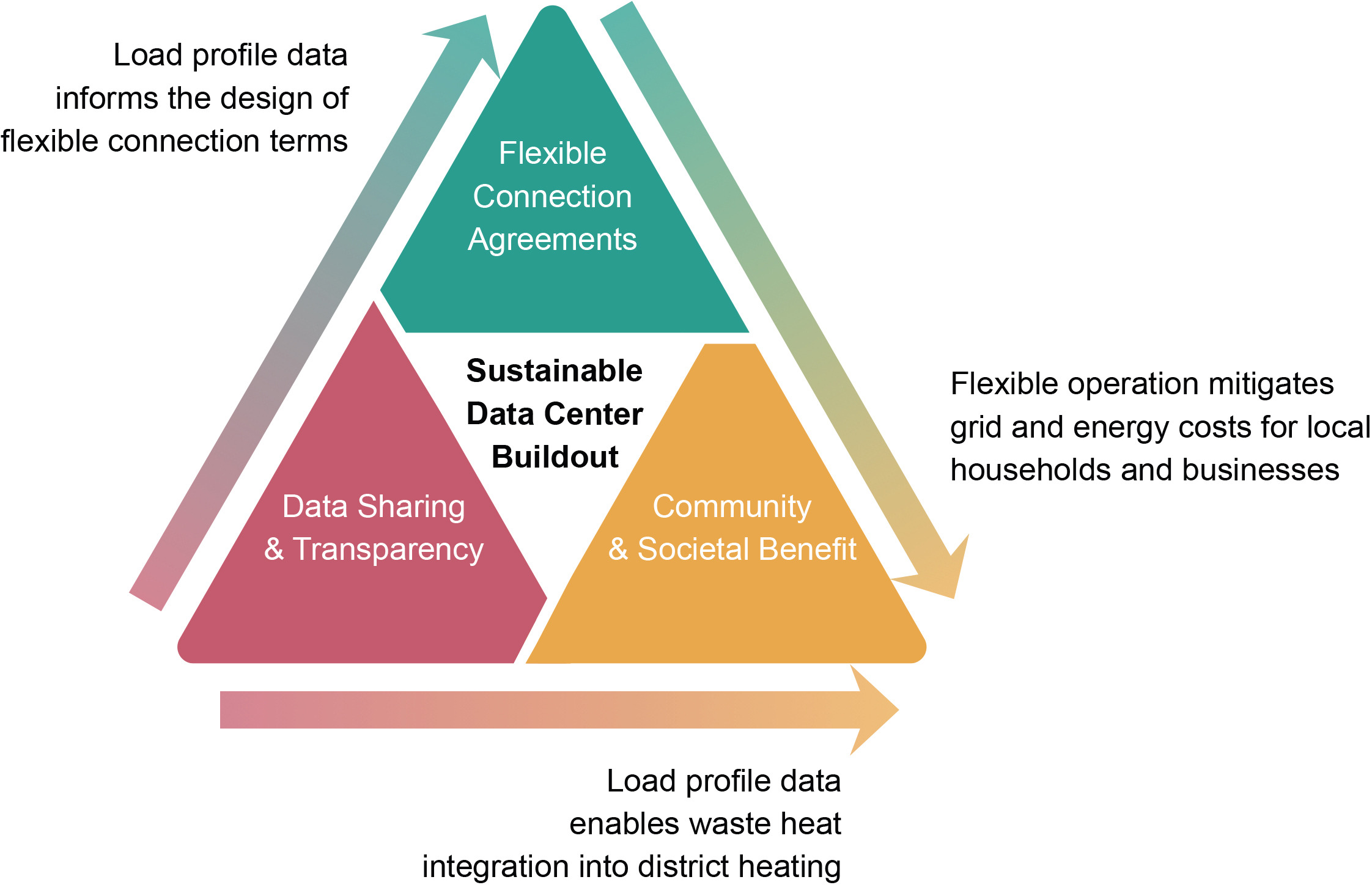
Governing AI infrastructure on decarbonizing grids
R. El Makroum, C. Banet, Y. Van Fan, B. F. Waaler, B. Gamazaychikov, S. Gros, I. Hernando-Gil, M. Korpås, A. O'Sullivan, M. Qadrdan, T. B. Strømstad, S. Zwickl-Bernhard, M. O'Malley, H. Auer • Cell Press - Joule
Estimating residential flexibility from smart meter data: A bilevel framework for demand response aggregation
R. El Makroum, S. Zwickl-Bernhard, L. Kranzl, H. Auer • Elsevier - Energy Conversion and Management

Conversational Demand Response: Bidirectional Aggregator-Prosumer Coordination through Agentic AI
R. El Makroum, S. Zwickl-Bernhard, L. Kranzl, H. Auer • 2026 22nd International Conference on the European Energy Market (EEM)

Agentic AI Home Energy Management System: A Large Language Model Framework for Residential Load Scheduling
R. El Makroum, S. Zwickl-Bernhard, L. Kranzl • Elsevier - Results in Engineering

Load Scheduling Optimization for User-Centric Residential Demand Response Leveraging Time Use Surveys
R. El Makroum, S. Zwickl-Bernhard, L. Kranzl, H. Auer • Elsevier - Applied Energy

///// Invited Lectures
Can Households Talk Their Way to Flexibility?
UCL Energy Institute, University College London • London, United Kingdom • 16 July 2026
Agentic AI Systems: Design, Implementation, and Real-World Applications
Central European University • Vienna, Austria • 4 March 2026
AI and Optimization: Synergies and Frontiers
Norwegian University of Science and Technology • Trondheim, Norway • 13 February 2026
Flexibility as a Key Enabler of the Energy Transition
Al Akhawayn University in Ifrane • Ifrane, Morocco • 11 June 2025
///// Public Engagement
A Regional Strategy Is Essential
Eine regionale Strategie ist unerlässlich
Kurier • Expert Interview • 10 October 2026
An interview in Kurier's Lower Austria edition, printed alongside a report on a planned data center in Stetten. I argued that Austria does need local compute so that research, industry, and public services can process sensitive data at home, while being candid about the cost: a large AI data center draws hundreds of megawatts around the clock, including at times when regional demand already peaks. I pushed back on jobs as a selling point, since a typical facility employs around 50 people once the one-to-two-year construction peak is over, and noted that digital sovereignty depends on who operates a site and what it is used for. Since regions differ in resources, grid capacity, and priorities, siting decisions belong at the regional level, which makes a regional strategy essential.
Data Centers: Adaptation to the Power Grid Needed
Rechenzentren: Anpassung ans Stromnetz nötig
ORF • Press Coverage • 28 September 2026
Coverage by Austria's public broadcaster of our Joule paper on governing AI infrastructure. The piece reports the study's central argument that data centers should adapt to grid capacity rather than the reverse, through connection agreements that guarantee a base load and allow additional capacity to be curtailed when the grid is stressed. I am quoted on why operators site facilities where a grid connection can be obtained quickly rather than where electricity is cheapest, and on the need for better data on data center consumption to plan grid infrastructure.
Study: Data Centers as a Hurdle for the Energy Transition
Studie: Rechenzentren als Hürde für Energiewende
Der Standard • Press Coverage • 28 September 2026
Der Standard's report on our Joule paper. The article explains the study's finding that data centers must adapt to existing grids rather than the other way around, and places it against the backdrop of the AI boom reviving gas power plants in the United States, where by late 2025 a large share of planned gas capacity was earmarked for data centers. It also notes the growing public resistance to data center projects in Austria.
Construction, AI Boom, Environmental Impact: What You Should Know About Data Centers
Aufbau, KI-Boom, Umweltschutz: Was man über Rechenzentren wissen sollte
Der Standard • Expert Interview • 17 August 2026
An explainer on the data center boom and what it means for the grid and Europe's digital sovereignty. Interviewed alongside Professor Ivona Brandic, I discussed why data centers are so much more present in public debate today than a few years ago, why much of the announced demand is speculative, and how flexible operation, such as scheduling training runs when renewable generation is high or the grid is lightly loaded, could ease the burden data centers place on the energy system.
AI & Data Centres in the Energy Transition
NTNU Energy Transition Week, Trondheim, Norway • Workshop Co-organizer • 17 March 2026
A one-day workshop convening researchers, industry, policymakers, and system operators on how Norway can become a European AI data center hub without derailing its energy transition. Co-organized by TU Wien, NTNU, Imperial College London, the University of A Coruña, and DNV, the program covered global AI energy demand, grid integration, local impacts, and governance. I chaired the organizing committee and gave the morning wrap-up; the discussions fed directly into our Joule paper on governing AI infrastructure.
////// Projects
///// Software
//// Agentic AI HEMS
Agentic AI Home Energy Management System
An agentic AI system for intelligent home energy management with Flask API backend and Streamlit visualization dashboard. Features autonomous orchestration with specialist agents, real-time electricity price optimization, transparent ReAct reasoning chains, multi-appliance coordination, provider-agnostic LLM support, calendar integration for deadline constraints, and MILP baseline comparison. The web interface and GUI were designed to simplify reproducibility of research experiments.
//// DERMOT
Demand Response Management & Optimization Tool
Interactive demonstration platform for simulating demand response in positive energy districts. Features multi-household optimization with behavioral modeling, reinforcement learning for battery optimization, real-time load scheduling visualization with before/after DR event comparisons, load shifting analysis, interactive parameter modification for live demonstrations, and real appliances provided through the EPREL database
///// Horizon Europe
///// Research + Innovation
//// PEDvolution
Accommodating the Evolution of Positive Energy Districts
Developing interoperable solutions for planning and managing Positive Energy Districts across Europe. Features cross-sectoral integration of demonstrator sites in Germany, Slovenia, and Switzerland for district-level decarbonization. I'm contributing to the PED Energy Manager, through developing DERMOT.
//// WEAVE
Weaving Buildings, People, and In-Between Spaces into Climate-Responsive Neighbourhoods
Developing an early-stage decision-support system that links building and urban scales for climate-responsive neighbourhood design. Combines whole-life carbon, health, resilience, social, and district energy metrics with coupled building and urban microclimate simulation and co-creation with residents and planners, tested in three pilot districts in Bologna, Viladecans, and Budapest across 15 partners in 7 European countries. I'm contributing to district energy pre-planning and scenario assessment, quantifying flexibility, investment, and operational indicators for district heating, grid-interactive electrification, and demand response options at neighbourhood scale.
////// GET IN TOUCH

Reda El Makroum
PhD Candidate in Energy Systems Economics
Energy Systems Economics Lab
Institute of Net-Zero Energy Systems
Technische Universität Wien
Gußhausstraße 25-29, 1040 Vienna, Austria